Care for The Whole PERSON
-
- Physical
- Emotional
- Relational
- Spiritual
- Occupational
- Nurturing Needs
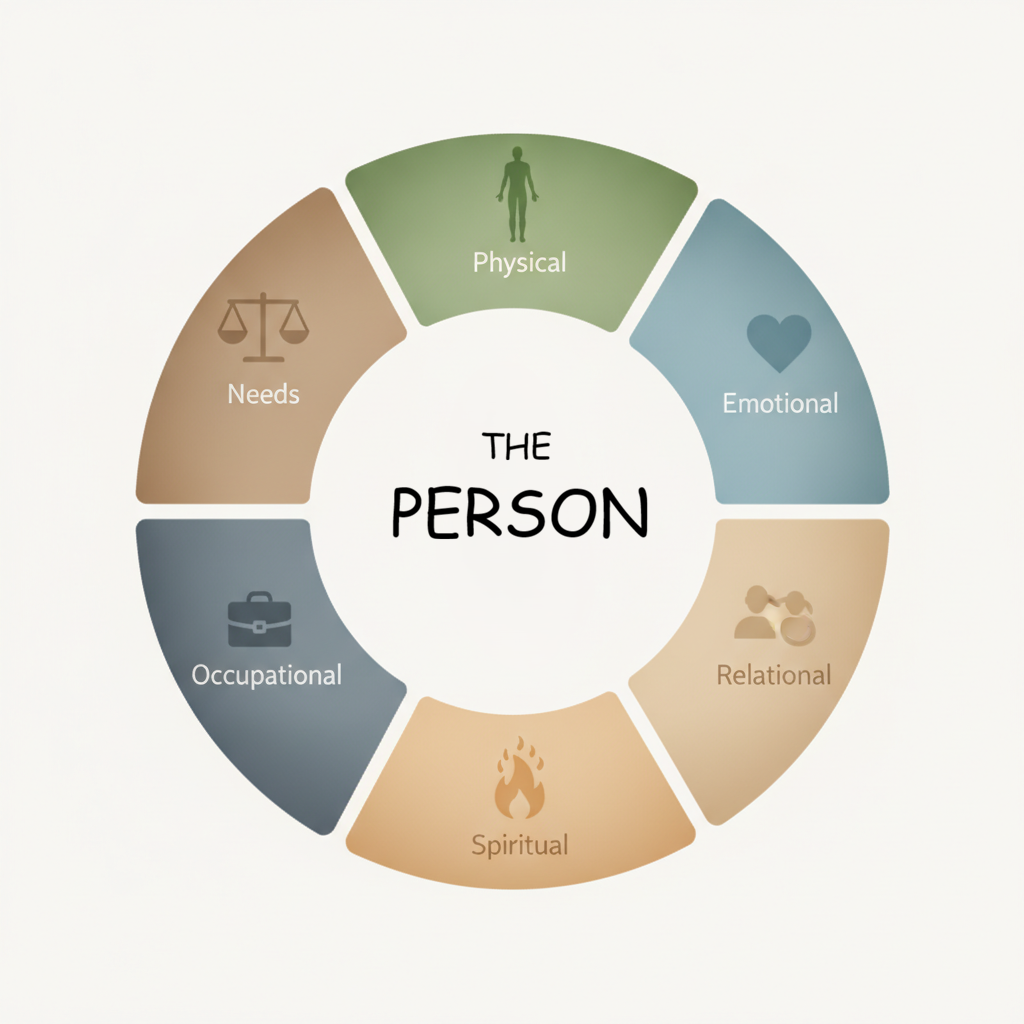
What is the Whole Self?
How do I move toward self care?
-
Start small and be intentional – Focus on one or two realistic changes rather than trying to fix everything at once.
-
Prioritize what matters most – Identify your key relationships, responsibilities, and values, and align your time with them.
-
Build consistent rhythms – Create simple daily and weekly habits that support rest, connection, and reflection.
-
Listen to your body and emotions – Pay attention to signs of stress, fatigue, or overwhelm and respond early.
-
Set healthy boundaries – Recognize your limits and protect your time and energy when demands increase.
-
Practice regular reflection – Take time to evaluate what is working, what needs adjustment, and where growth is needed.

Physical
Caring for your body is foundational to overall well-being. This includes sleep, nutrition, movement, hydration, and rest. Listening to your body’s signals and creating healthy rhythms helps sustain energy and prevent burnout.
Emotional
Emotional health involves recognizing, understanding, and expressing your feelings in healthy ways. It includes processing stress, practicing gratitude, and making space for both joy and grief rather than ignoring or suppressing emotions.

Relational
Healthy relationships provide support, encouragement, and resilience. Investing in meaningful connections, setting appropriate boundaries, and communicating openly helps strengthen your capacity to navigate stress and challenges.

Spiritual

Occupational
This area focuses on your work and ministry. Establishing healthy routines, setting limits, reflecting on your work, and maintaining balance helps you serve effectively without becoming overwhelmed.

Nurturing Needs
Nurturing your needs means being intentional about both what you take in (input) and what you give out (output). It includes evaluating your roles, managing expectations, and ensuring your time, energy, and efforts align with what is truly life-giving and sustainable.